The air crackles with anticipation. Your brand is about to make a major announcement—a new product, a fresh identity, or a monumental service offering. In today’s hyper-connected world, a simple press release or a static landing page just won’t cut it. To truly capture attention and drive genuine excitement, you need to think beyond the conventional. You need to think immersive.
This is the era of Immersive Launch & Reveal Experiences, where technology isn’t just a tool for distribution, but the very canvas for creation. It’s about building a moment so memorable, so interactive, that it transforms a passive audience into active participants. For marketing agencies, brand managers, and CMOs across thriving markets like Dubai, Abu Dhabi, Saudi Arabia, Qatar, and Kuwait, understanding this shift is the key to unlocking unparalleled market penetration.
💡 The Power of Presence: Why Immersive Experiences are Essential
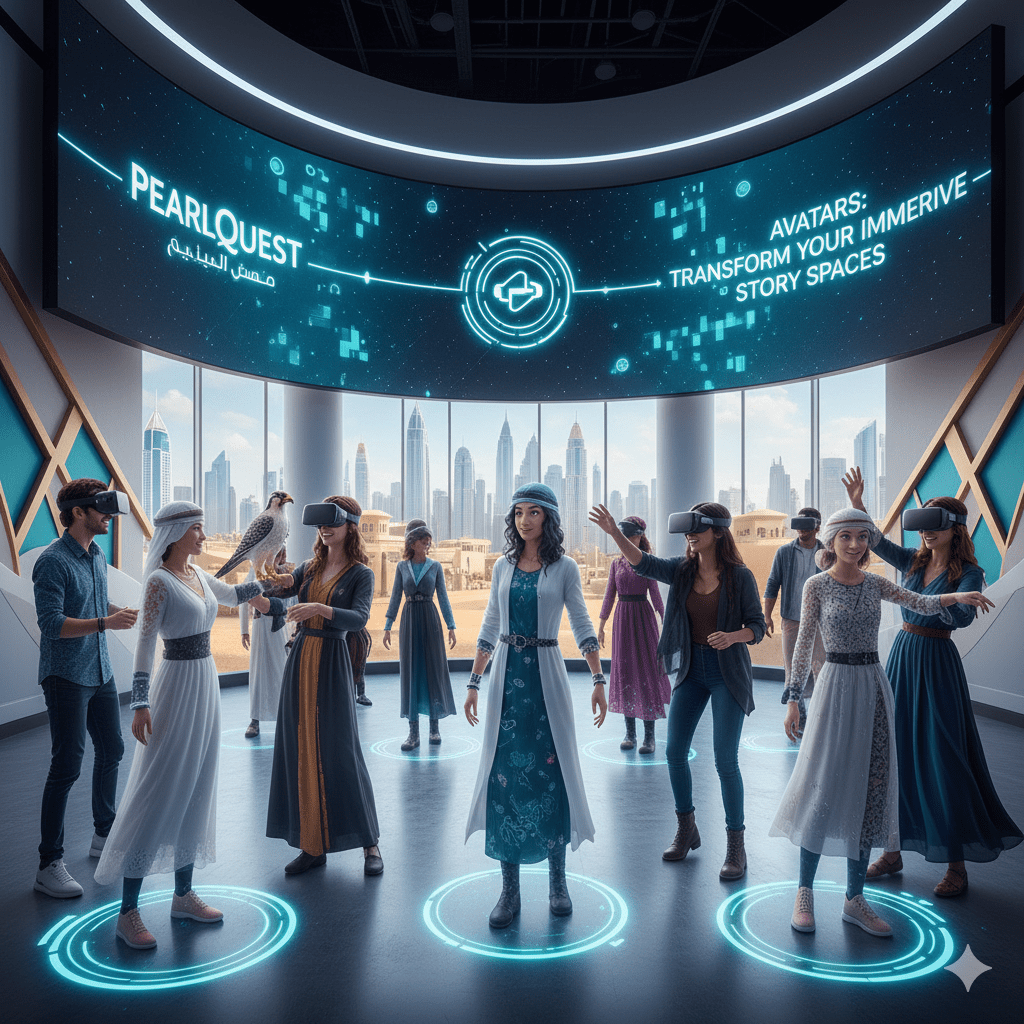
What makes an immersive experience so potent? It’s the ability to evoke presence. Whether it’s through Virtual Reality (VR), Augmented Reality (AR), or mixed reality installations, these technologies dissolve the barrier between the consumer and the product. Instead of reading about a new car, a user can sit inside a digital twin of it using a VR headset. Instead of seeing a new building design on a blueprint, they can place a 3D model of it onto their desk via AR.
At PearlQuest, our motivation is deeply rooted in this concept. We are constantly thrilled by the potential of these technologies to bridge the gap between imagination and reality. We are inspired by how an effectively designed Immersive Launch & Reveal Experience can cut through the noise, leaving a lasting, positive impression that drives conversions and loyalty.
🔍 Deconstructing the Immersive Tech Landscape
The term “immersive tech” is broad, but for launch and reveal purposes, a few sub-categories stand out as truly game-changing:
Virtual Reality (VR): Creating a fully enclosed, computer-generated environment.
Application: Perfect for virtual showrooms, digital press conferences, or product “test drives.”
Example: Launching a luxury yacht in Dubai to a global audience who can virtually walk the deck from their homes.
Augmented Reality (AR): Overlaying digital elements onto the real world.
Application: Excellent for product previews, interactive packaging reveals, or location-based launches.
Example: Letting potential customers in Saudi Arabia place a full-scale digital furniture piece in their living room before purchasing.
Mixed Reality (MR) & Extended Reality (XR): Blending the physical and digital worlds for complex interactions.
Application: Large-scale public installations or sophisticated training simulations unveiled during the launch event.
Thought Leadership :* Integrating XR into events in Qatar allows for truly bespoke, on-the-fly content modification, a must-have for high-stakes reveals.
Volumetric Video and Digital Twins: Capturing real-world objects or people as interactive 3D models.
Application: Allowing brand ambassadors to appear as lifelike holograms during a product launch in Kuwait.
✨ Personalized Engagement: My Role at PearlQuest
As a content writer for PearlQuest, I’ve seen firsthand how crucial thoughtful content is to the success of an Immersive Launch & Reveal Experience. It’s not enough to have dazzling technology; you need a compelling narrative. My team and I focus on crafting the stories, scripts, and interactive text that breathe life into these digital worlds.
For instance, we plan to leverage our expertise in narrative design to create more emotionally resonant experiences. We wish to develop a framework where the user’s choices within a VR launch scenario directly influence the ‘reveal’ animation. This level of personalized engagement is what elevates a launch from a viewing to an experience. We are already motivated by the success of integrating gamification elements—something we explore in-depth with our game development services.
🗺️ Best Practices for Mapping Your Immersive Launch & Reveal Strategy
Successfully executing an Immersive Launch & Reveal Experience requires more than just budget—it requires a roadmap.
Define the Moment What is the core emotional takeaway? Is it awe, utility, or innovation? Let this guide the technological choice.
Target the Platform: Is your audience primarily mobile? Use AR. Are they high-net-worth individuals who can dedicate time for a deep dive? Go for high-fidelity VR.
Measure the Unmeasurable: Immersive experiences generate rich data—interaction time, gaze tracking, choice pathways. Use these insights to optimize future campaigns, particularly for regional nuances within the GCC, ensuring messaging resonates from Abu Dhabi to Doha.
Future-Proofing: Ensure your virtual assets are ‘Digital Twin’ ready. This investment saves time and cost for future marketing efforts and iterations.
The landscape of brand launches is rapidly evolving. The Middle East, with its forward-thinking embrace of technology and mega-events, is the perfect stage for pioneering these next-generation reveals. We at PearlQuest believe that mastering the art of the Immersive Launch & Reveal Experience is no longer optional—it is a competitive necessity.