
Museums & Cultural Spaces / UAE & GCC

Interactive interpretation for museums and cultural spaces

Turn stories, ideas and spaces into experiences visitors can explore.

Art that responds

Stories made tangible

A story worth exploring.

PearlQuest designs and delivers interactive cultural experiences across the UAE and GCC. We combine approved interpretation, custom software, projection, LED, touch, sound and sensor-based interaction to support discovery, participation and spatial storytelling.

When interpretation needs to be felt as well as read

Cultural visitors bring different ages, languages, interests and levels of prior knowledge. The experience should make the story clear, protect its integrity and give people a meaningful way to explore or contribute.

PearlQuest can shape a single interactive exhibit or a connected journey across a space. The format depends on the curatorial objective, content rights, visitor flow, conservation constraints, accessibility, acoustics, lighting and operating model.

Selected PearlQuest work

Different interactions. Observable delivery.

Explore published projects and the practical delivery details behind each experience.

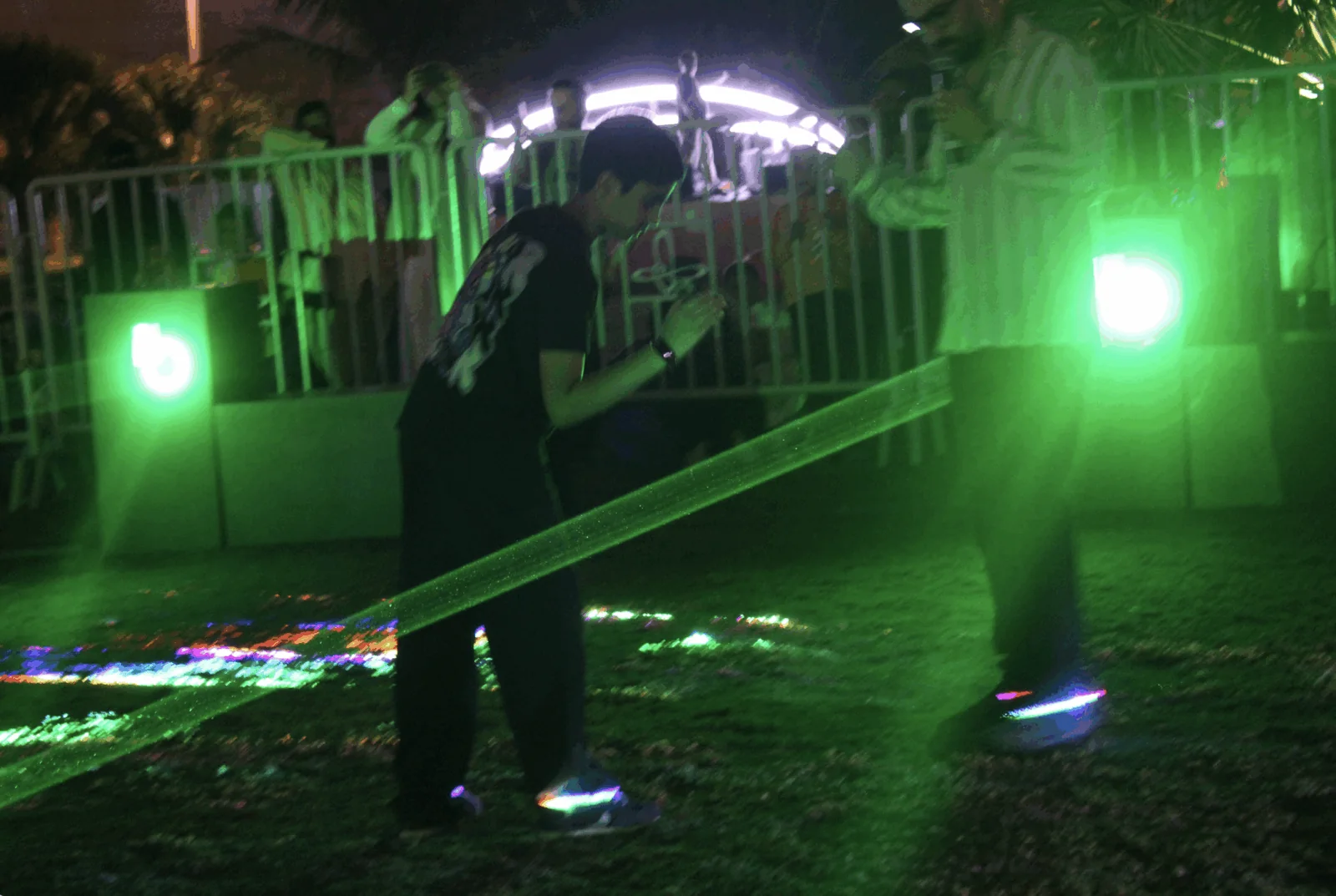
Ithra PiCon life-size laser harp

Ithra PiCon life-size laser harp

At Ithra's PiCon science festival in Dammam, PearlQuest engineered a life-size laser harp with seven green beams and a colour spectrum projected across the floor. Crossing a beam triggered programmed tones, allowing multiple visitors to create sound through movement.

View the published project
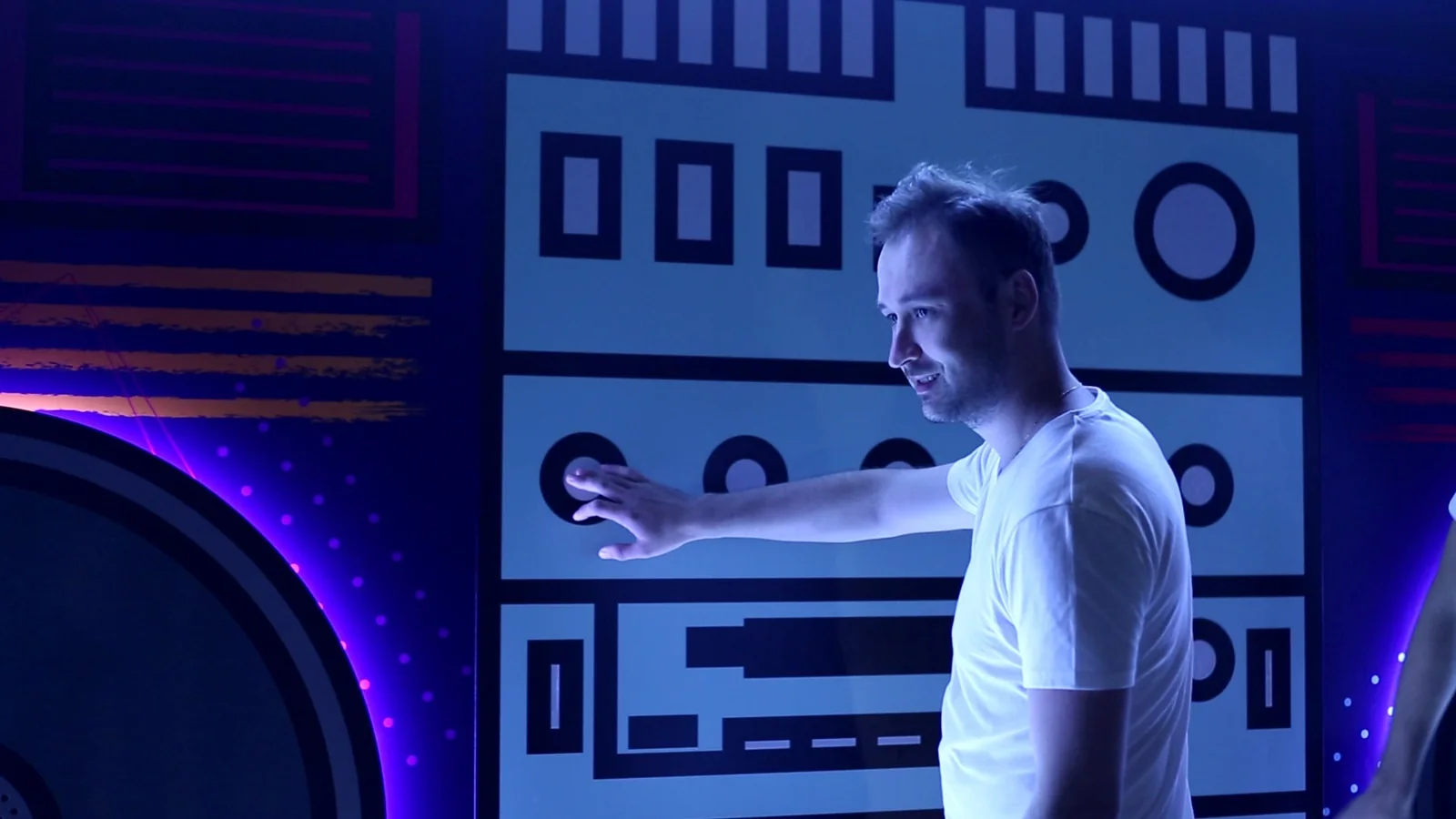
Marina Music Festival interactive musical wall

Marina Music Festival interactive musical wall

PearlQuest created an interactive wall shaped like a boom box. Touch-responsive areas used special paint and electronics so that each tap played a different tone.

View the published project

Sharjah International Children's Film Festival 2017

PearlQuest's published festival case identifies VR experiences, a green-screen video booth, digital signage and a social-media visualisation wall as parts of the visitor experience.

View the published project

Ithra PiCon: making action and reaction audible

The laser harp linked a science-festival theme to a direct visitor action: crossing light beams to create programmed tones. The case shows how a learning idea can become a multi-user art-and-technology installation.

Explore the case study

SICFF: combining interpretation, participation and venue media

The festival case combined VR, green-screen capture, digital signage and social visualisation. For cultural teams, it demonstrates how several touchpoints can support one visitor programme.

Explore the case study

Choose the right interaction

Cultural-experience formats we can build

Start with the audience action. Content, hardware, integrations and operating support follow the agreed scope.

01

Interactive exhibits and interpretation kiosks

Let visitors explore approved text, maps, media, objects and timelines through a clear touch interface.

02

Responsive art and music installations

Use touch, movement, light, sound and sensors to make participation part of the artwork or learning idea.

03

Immersive rooms and tunnels

Surround visitors with projection, LED, spatial audio and interactive content when the story benefits from a walk-through format.

04

Collaborative walls and messages

Invite drawing, pledges, voting or shared contributions when visitor participation supports the curatorial objective.

05

AR and VR story layers

Extend physical objects or spaces with optional digital interpretation, reconstruction or guided discovery.

06

Visitor information and wayfinding

Support schedules, zones, facilities and route guidance through CMS-controlled touchpoints, depending on the brief.

How we work

A practical path from curatorial intent to live exhibit

One connected plan for content, technology and the operating environment.

  1. 01

    Discover

    Clarify the business objective, audience, content, constraints, stakeholders and success measures.

  2. 02

    Design

    Map the audience journey, interaction, interface, information structure and content behaviour.

  3. 03

    Specify

    Define the approved software, displays, sensors, XR devices, data, integrations and deployment requirements.

  4. 04

    Build

    Develop the experience and integrate the approved content, software, hardware and control logic.

  5. 05

    Test

    Run usability and technical QA for content, interaction accuracy, reliability, privacy and relevant offline scenarios.

  6. 06

    Deploy

    Support installation, calibration, handover and operating requirements according to the agreed project scope.

Before the brief

Your questions, answered.

Practical considerations for museums & cultural spaces.

Does the technology have to dominate the exhibit?

No. Begin with the interpretation objective and visitor action. Technology should support the story, object or learning outcome and can be visually restrained where appropriate.

Can PearlQuest work with curators and existing exhibit designers?

Yes, subject to the agreed team structure. Curatorial ownership, review stages, content handoff, spatial responsibilities and final approvals should be explicit.

Can the experience support different ages and languages?

Potentially. Age range, reading level, language, physical reach, sensory needs and accessibility should be designed and tested as scoped requirements.

Can exhibits be temporary or permanent?

Yes. Materials, sensors, projection, enclosures, lighting, maintenance and content updates should match the operating period and venue conditions.

Can the system protect collections and sensitive spaces?

The design can avoid physical contact with objects and respect defined conservation zones. Site surveys and conservation requirements must guide the interaction and hardware placement.

Can museum teams update content after launch?

A CMS or managed update workflow can be included where required. Roles, content structure, training, access and support must be defined in scope.

How should visitor engagement be measured?

Agree observable behaviours such as completed interactions, content paths, contributions or route choices. Data capture, privacy and reporting must be approved; performance improvement is not guaranteed.

What should we share for an initial discussion?

Share the interpretive goal, audience, collection or story, approved content, rights status, space drawings, visitor flow, accessibility needs, timeline and operating model.

Start a conversation

Begin with the story, visitor action and curatorial boundary

Tell PearlQuest what visitors should understand, feel or do, and what the space and collection must protect. We will help shape the interaction, medium and deployment approach.

Plan your cultural visitor experience
  • 01The audience and the action
  • 02Approved content and existing assets
  • 03Space, devices and operating conditions
  • 04Timeline, approvals and success measures