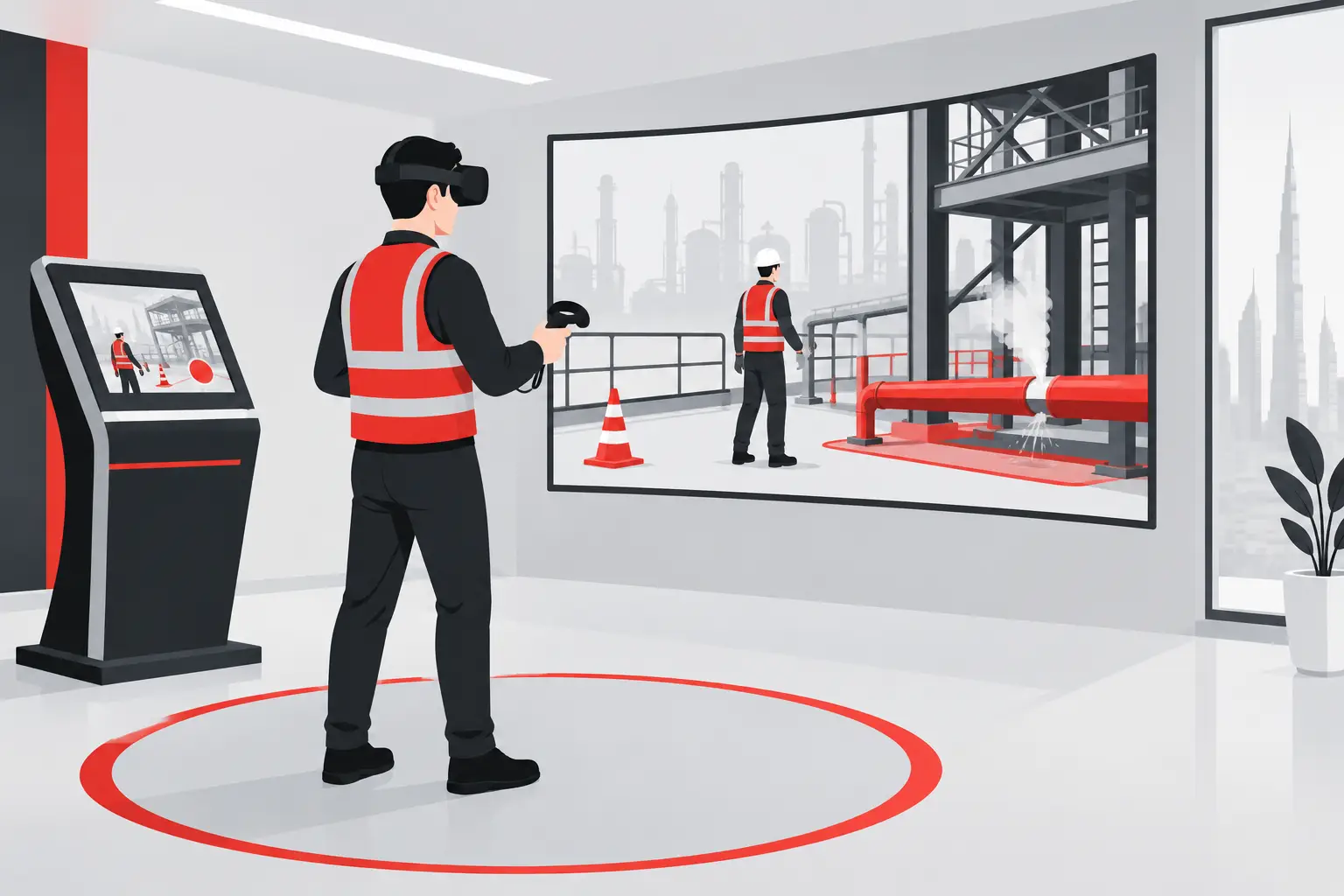
A public entity planning a consultation, awareness program, or place-based initiative often asks one practical question: how can people participate without creating an unmanaged stream of comments, queues, and disconnected data? Designing public participation platforms starts with a direct answer – give each audience a clear action, define how that action is reviewed, and connect the digital and physical touchpoints to an operating plan.
For government and public entities in the UAE, participation may happen in a service center, exhibition, public venue, destination, school program, or campaign website. The platform is not simply a webpage, kiosk, or interactive wall. It is the complete system that invites input, guides choices, captures approved data, and gives the project team a workable way to respond.
Start with the participation decision
A platform should be designed around the decision it needs to inform. If a public entity needs to understand which amenities visitors value in a proposed space, a short prioritization activity may be more useful than an open comment field. If the goal is awareness, the interaction may ask people to make choices in a scenario, then show the practical implications of those choices. If the goal is co-creation, participants may need a structured way to submit ideas that can be grouped, reviewed, and displayed.
This distinction changes the experience design. Open-ended participation can surface unexpected perspectives, but it needs clear moderation rules and greater review capacity. Guided questions make analysis easier, but they can limit the range of feedback. Neither approach is automatically better. The right format depends on the project objective, the sensitivity of the topic, the available operating team, and what can realistically be acted on after participation closes.
Before selecting technology, write a one-sentence participation statement: “We need this audience to do this action so the project team can make this decision.” That sentence becomes the test for every screen, prompt, and physical touchpoint.
Design the audience journey, not just the interface
Public participation is often lost in small moments. A visitor may not know why they should contribute, whether their input is anonymous, how long the activity will take, or what happens next. Good platform design resolves those questions in the journey itself.
Begin with the invitation. In a public venue, this may be a concise message on an LED display, a facilitated prompt, or signage that explains the activity in plain language. On a mobile or web experience, the opening screen should set expectations before asking for input. Explain the purpose, the expected time commitment, and the type of response requested.
Next, reduce the action to manageable steps. A participation journey might ask a visitor to select a priority, react to a proposed concept, add a location-based observation, or complete a short scenario. Each step should produce a useful input. Avoid interactions that feel playful but do not provide a meaningful contribution to the program.
The final moment matters too. Participants need a clear completion state. Depending on the project, that may be a confirmation screen, a visualized aggregate response, a next action, or a message explaining how the collected input will be handled. Do not imply that every individual suggestion will be adopted. The platform should accurately describe the process without making promises the project team cannot support.
Physical, digital, and hybrid formats
A digital-only platform can reach people before or after a venue visit, while a physical installation can create visibility and participation at the point of experience. A hybrid model can connect both.
For example, an interactive kiosk may invite visitors to answer a focused question in a lobby, exhibition, or public event. A QR handoff can then continue the journey on a participant’s own device. An interactive wall can make collective responses visible, but its content model must prevent unreviewed submissions from appearing in a public setting. A web-based activity can support broader participation, though it requires a considered traffic plan and clear paths for users on different devices.
The format should follow audience behavior. A high-throughput venue may need interactions that take less than a minute and can reset automatically. A facilitated workshop can support longer prompts, richer discussion, and assisted participation. A consultation that runs over several weeks may need a digital experience with scheduled content updates and moderation workflows.
Build the operating model into the platform
The strongest experience concept can fail if the team has not planned who manages it. Designing public participation platforms means defining the operating model as early as the user journey.
Content governance is the first requirement. Identify who approves questions, images, explanatory text, and response categories. If participants can submit free text, images, or ideas, define the moderation path before launch. Consider what is displayed immediately, what waits for review, what is excluded, and who has authority to make those decisions.
Data handling also needs a practical scope. Decide which inputs are necessary and avoid collecting information that is not required for the participation objective. Define whether responses are anonymous, whether participants can return to an unfinished activity, how exports will be structured, and which team receives the reporting view. These are project design decisions, not details to leave until deployment.
For a venue-based platform, staffing and maintenance are equally relevant. A kiosk needs a physical location, power, network planning where required, cleaning access, and a process for reporting faults. Interactive floors, projection environments, and large-format displays need sightline studies, lighting considerations, sound planning where audio is used, and suitable visitor circulation. A platform that depends on a facilitator should include facilitator prompts and escalation guidance, not just a polished interface.
Select technology around the participation task
Technology should serve the interaction, not lead it. A simple responsive web experience may be the right choice for a time-bound consultation. A custom game can help participants understand trade-offs in planning, safety, resource use, or service choices. Interactive maps can collect place-based observations when location context is central to the discussion. Digital twins can visualize proposed environments when stakeholders need to explore options in spatial context.
AI-powered components can assist with content operations, such as grouping large volumes of similarly structured input for team review. They still need human oversight, approved categories, and a defined workflow. AI should not be positioned as a substitute for public decision-making or accountable review.
Hardware selection needs the same discipline. Choose commercial-grade displays, kiosks, sensors, projection, or LED systems based on dwell time, environmental conditions, viewing distance, interaction method, and installation constraints. A visually ambitious installation may not suit a temporary program with limited setup time. Conversely, a basic tablet setup may be insufficient where public visibility and shared participation are central to the objective.
A scoping checklist for public engagement projects
A useful project brief identifies the participation goal, target audiences, venue or digital channels, and the decision the input will support. It should also describe the content sources available, such as approved messaging, maps, imagery, policies, scenarios, or proposed plans.
For deployment planning, specify the project location, available space, expected visitor flow, opening hours, technical infrastructure, installation access, and whether the experience is temporary or permanent. Clarify the review team, moderation requirements, reporting needs, language requirements, and any existing digital systems that the platform may need to work alongside.
PearlQuest can scope public engagement as an integrated experience: content, custom software, relevant hardware, physical installation requirements, and the operational considerations that keep participation usable after launch. The right solution may be a focused web interaction, a public-facing installation, or a connected mix of both.
Measure participation quality before launch
Evaluation measures should be proposed during planning, not added after the experience is live. The measures may include completed interactions, drop-off points, response distribution, time spent in an activity, number of moderated submissions, repeat participation patterns, or operational uptime. These measures describe what the project team intends to monitor. They are not a guarantee of public response or program outcomes.
A pilot or content review session can reveal whether instructions are understood, whether questions produce usable answers, and whether the physical setup creates congestion. Small revisions at this stage are often more valuable than adding features late in the build.
Public participation works when people can see what they are being asked to do, complete the action without friction, and trust that the process has a defined purpose. If you are planning a UAE or GCC project, contact PearlQuest with your location, audience, space or channel, objective, timeline, and operational requirements to start a practical scope.