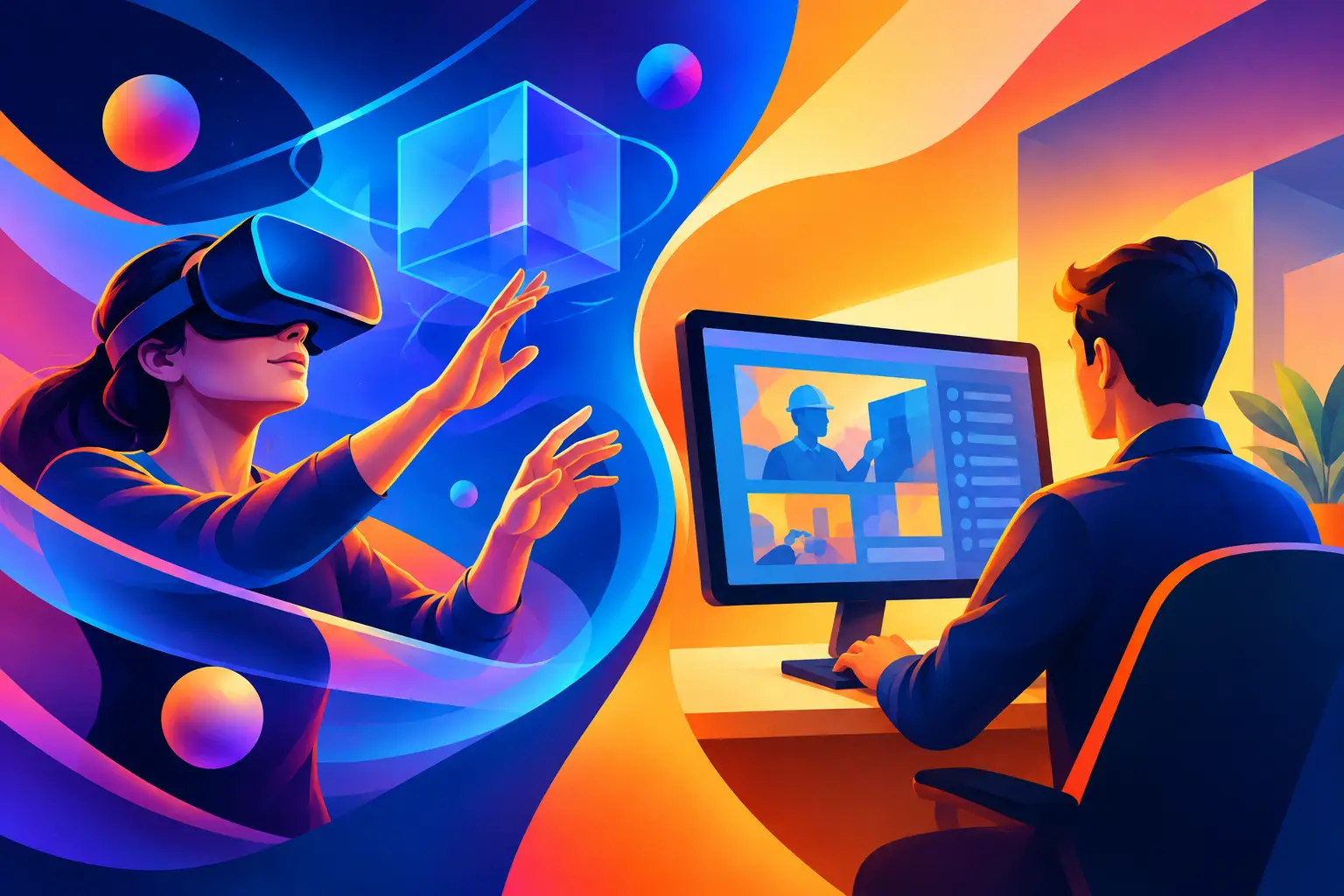
A busy show floor does not have an attention problem. It has a participation problem. Visitors may notice a dramatic LED wall or a polished booth, then keep walking because nothing gives them a reason to stop. The right event engagement games ideas change that equation: they create a clear invitation, a quick payoff, and a brand moment worth sharing.
For marketing teams, agencies, and event producers, the goal is not to add a game for decoration. It is to design an interaction that moves people through a product story, captures qualified engagement data, and creates visible energy around the space. That means choosing mechanics that fit the audience, the venue, and the commercial outcome.
Start With the Behavior You Want to Create
Before selecting a screen, sensor, or game format, define the action that matters. At an exhibition, the priority may be generating qualified conversations with buyers. At a product launch, it may be teaching visitors one feature they can repeat later. In a retail activation, it could be increasing dwell time and encouraging social content.
A game should reward that behavior, not distract from it. A fast reaction challenge can pull people into an open booth, while a multi-stage team mission can support a longer brand narrative. The difference matters. If the interaction is entertaining but leaves participants unable to name the product, it has created traffic without creating value.
Design around three practical constraints as well: average play time, visible queue capacity, and reset time between players. A 90-second experience can be excellent for a sponsored lounge but may create friction in a high-volume corridor. For large crowds, aim for a game that spectators can understand in five seconds and players can complete in under a minute.
12 Event Engagement Games Ideas for Live Experiences
1. Gesture-Controlled Product Catch
Turn product benefits into objects that visitors catch with hand tracking. A mobility brand might have participants collect efficiency icons while avoiding common travel delays. It is intuitive, camera-friendly, and can work without a physical controller, which keeps turnover fast in a public environment.
2. The Interactive Floor Sprint
Use a projection or LED floor to create a timed challenge beneath participants’ feet. Players navigate illuminated zones, avoid obstacles, or step on the correct answers to product questions. This format creates movement that is visible from a distance, making the gameplay itself an attractor for passing foot traffic.
3. AI-Powered Brand Quiz Show
Replace the static trivia kiosk with an AI host that asks tailored questions, responds to answers, and adapts the difficulty level. It works particularly well for launches with varied audiences, where consumers need an accessible story while industry visitors want more technical detail. Keep the AI personality on brand and give it tightly defined knowledge boundaries.
4. Team Mission Control
Build a multiplayer challenge where each participant controls one part of the outcome. One player may identify clues on a touch wall, another may operate a tangible table, and a third may make final choices on a large display. Team formats extend dwell time naturally and give colleagues a reason to enter together.
5. Digital Prize Crane
A virtual claw machine remains effective when the prizes and mechanics relate to the campaign. Instead of random merchandise, let visitors collect ingredients for a new product, components of a solution, or destinations in a travel itinerary. A leaderboard or limited daily reward schedule can sustain return visits without turning the experience into a giveaway queue.
6. AR Scavenger Hunt
Place digital clues across an event, venue, or retail district and let visitors reveal them through augmented reality. Each discovery can deliver a product fact, unlock a character, or contribute to a final reward. This is useful when organizers need to distribute visitor traffic across multiple zones rather than concentrating everyone at one stand.
7. Build-the-Story Touch Table
Invite groups to arrange physical objects on a sensor-enabled table and watch the digital world respond. A property developer could let guests place transport, parks, and buildings into a master plan. A technology company could ask visitors to assemble a connected ecosystem. Tangible interaction is especially effective when the product is complex or abstract.
8. Live Audience Poll Battle
Give the crowd a choice with real consequences on a large display. Participants vote by scanning, tapping, or interacting at a kiosk, then see the dominant choice reshape an on-screen city, vehicle, character, or campaign scenario. The mechanic is simple, but the public result creates social proof and keeps spectators invested.
9. Reaction Wall Challenge
A responsive LED or projection wall lights up targets that participants must hit with hands, foam props, or body movement. The brand can map targets to key messages, colors, or product categories. It is a high-throughput format with a competitive energy that works well in sports, automotive, telecom, and youth-focused activations.
10. Virtual Product Trial
Use VR or mixed reality to put visitors inside a scenario that demonstrates the product’s outcome. Instead of showing a machine, let players operate it during a simulated high-pressure task. Instead of explaining a destination, let them complete a mission inside it. The trade-off is throughput: headset experiences need clear hygiene, staffing, and queue management plans.
11. The Data Decoder
Turn enterprise information into a collaborative puzzle. Visitors identify patterns on an interactive display, sort data streams, or make operational decisions against a timer. This format is ideal for B2B exhibitions and learning environments because it demonstrates expertise through action rather than a passive presentation.
12. Avatar Meet-and-Compete
Create a branded digital character that welcomes participants, guides gameplay, and reacts to their results. The avatar can host a quick challenge, explain a prize, or direct qualified visitors to the next touchpoint. It adds personality to the experience, but it must be designed for fast interactions. A long scripted conversation will slow a busy event floor.
Choose the Format That Fits the Event
The strongest event engagement games ideas do not always require the most complex technology. A trade show with six hours of continuous traffic may benefit more from a gesture game and a visible leaderboard than a cinematic VR experience. A closed executive event, by contrast, can justify a guided mixed-reality simulation with a longer narrative and deeper product education.
Match the game to the physical setting. Open spaces favor large-format interactions such as floors, walls, and projection rooms because their energy is visible from afar. Smaller footprints benefit from touch tables, vertical kiosks, or compact camera-based games. If the activation spans a whole venue, mobile AR challenges and digital checkpoints can guide movement without adding more physical congestion.
The reward also needs to fit the effort. For a 20-second challenge, instant recognition, a score, or a digital keepsake may be enough. For a five-minute collaborative mission, offer a more meaningful outcome: priority access, a product consultation, a personalized content asset, or entry into a scheduled prize draw. Avoid making rewards so valuable that they attract people who have no interest in the brand experience.
Design for Measurement, Not Just Applause
Crowd photos are useful evidence of energy, but they are not a full measurement strategy. Build data capture into the experience from the start. Track starts, completions, replay rates, average play duration, game choices, leaderboard performance, and the number of participants who move to a next-step conversation.
For lead-generation campaigns, use a low-friction consent flow after the game rather than before it. A participant who has just achieved a score or created a personalized result is more likely to share details voluntarily. The value exchange must be clear, and data handling should align with local privacy requirements and the event organizer’s policies.
Operational data matters too. Sensors and platform reporting can reveal where queues form, when engagement peaks, which mechanics cause abandonment, and how staffing should change across the day. PearlQuest approaches these installations as connected experience systems, bringing creative interaction, physical hardware, custom software, and analytics into one deployable environment.
A game earns its space when it gives visitors something to do, gives staff a natural conversation starter, and gives the brand a useful signal about what happened. Start with one behavior worth changing, then make every visual, rule, and reward point toward it.