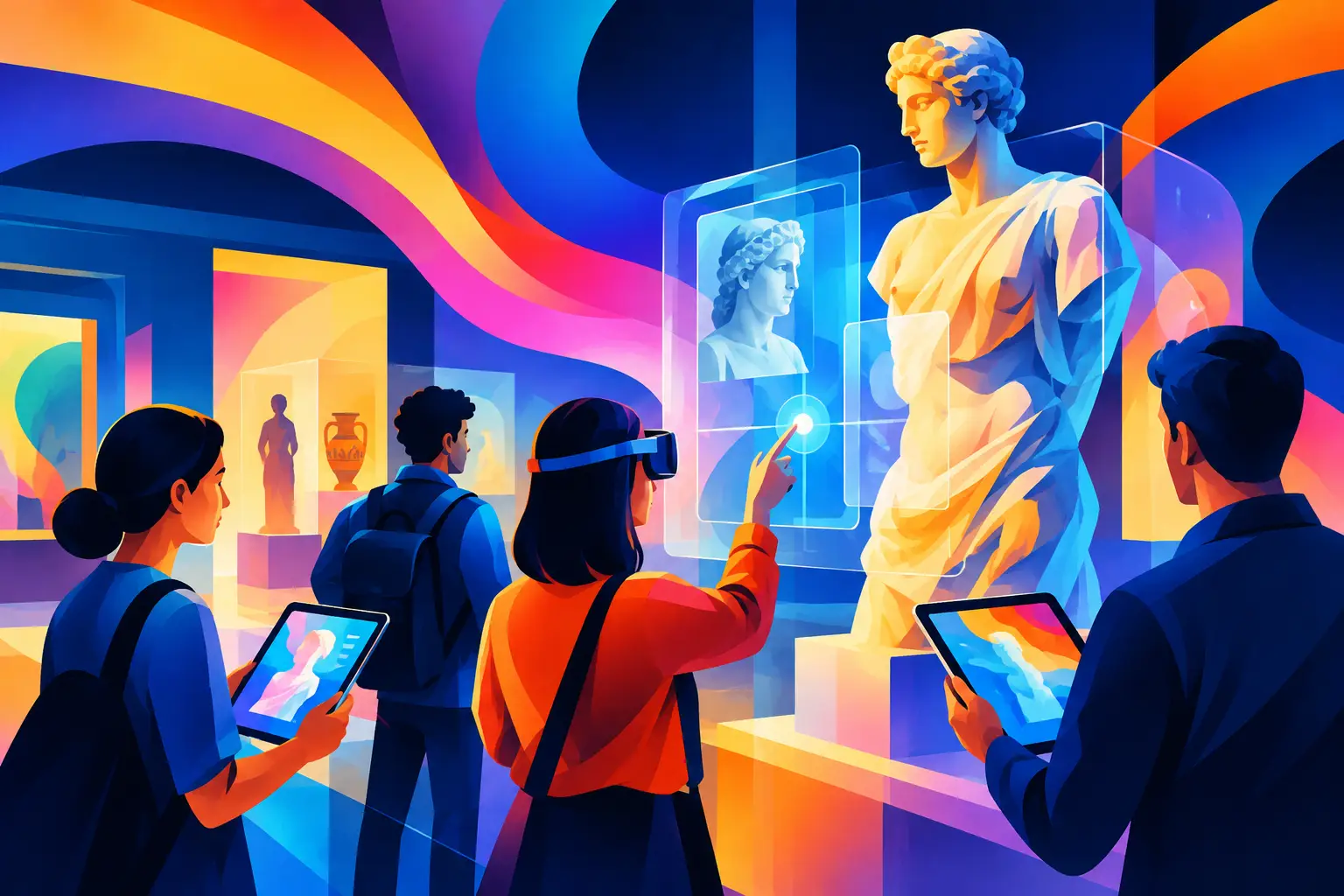
A flagship store can have perfect fixtures, premium inventory, and high foot traffic, yet still lose attention within seconds. Interactive retail experience design changes that equation by giving people something purposeful to do: compare, configure, play, visualize, create, or receive guidance that moves them closer to a confident decision.
For retail teams, the objective is not to place more screens on the shop floor. It is to choreograph a physical-digital journey that makes the brand easier to explore and the store more valuable to visit. The strongest installations turn product information, campaign ideas, and customer data into participatory moments that are memorable enough to share and practical enough to measure.
Why retail interaction now needs a job to do
Online shopping has trained customers to expect instant comparison, personalization, reviews, and endless product information. Physical retail still owns the advantages that a browser cannot reproduce: scale, texture, human energy, live demonstrations, and social discovery. Interactive technology works when it amplifies those advantages instead of attempting to imitate an e-commerce page on a large touchscreen.
A beauty counter might use an AI-assisted consultation station to help visitors identify product routines, then direct them to a specialist with a personalized recommendation. An automotive showroom can let guests configure a vehicle across an LED environment, visualize options at life size, and save the result for a sales follow-up. A sneaker launch can turn product features into a motion-driven challenge that generates a shareable score and a reason to explore the full collection.
Each format has a clear commercial role. It can reduce product complexity, create a campaign moment, capture qualified leads, manage queues, or give associates a better conversation starter. Without that role, an installation may attract a crowd but fail to support the store’s wider performance.
Interactive retail experience design starts with behavior
The first design question is not, “Which technology should we use?” It is, “What should the visitor do next?” A retail interaction should be built around a desired behavior: discover a range, understand a feature, try a look, join a loyalty program, book an appointment, or move to a specific area of the store.
This matters because engagement alone can be misleading. A photo booth may deliver a high volume of content, for example, but its value depends on whether it supports the campaign, attracts the right audience, and creates a useful path to product discovery. A quieter product visualization tool may have fewer interactions but generate stronger sales-associate conversations and higher-value leads.
Define the primary behavior early, then identify the friction blocking it. For a new product category, the friction may be confusion. For a high-consideration purchase, it may be hesitation. In a busy activation, it may be a lack of time. Interaction design should remove that specific barrier through an experience that feels quick, intuitive, and worth participating in.
Design for the three-second decision
Visitors decide almost immediately whether an interaction is for them. The invitation must be visible from a distance and understandable without a staff briefing. Motion, responsive light, a clear challenge, a striking visualization, or a simple prompt can create that initial pull.
The first action should also be low effort. Touch a product marker. Step onto a reactive floor. Scan an item. Choose a color. Raise a hand to trigger content. Once the system responds, the experience earns permission to ask for more time.
This is where physical design and digital design must operate as one system. Screen height, lighting conditions, crowd positioning, sound levels, cable management, accessibility, and the location of staff all affect whether an idea works in a real store. A beautiful interface cannot compensate for an interaction point hidden behind a queue or washed out by daylight.
Build experiences around product truth
Retail technology is most effective when it reveals something customers could not easily understand from a shelf label or static campaign visual. That may be ingredient transparency, engineering detail, customization options, origin stories, performance comparisons, or a digital preview of the product in use.
For cosmetics, augmented reality can provide a guided try-on that helps customers narrow choices before testing physical samples. For home and lifestyle retail, a room-scale projection or mixed-reality planner can show how a product fits within a space. For consumer electronics, an interactive table can translate technical specifications into real-world use cases rather than forcing visitors to decode a feature list.
There is a trade-off. High-fidelity visualization can be valuable for premium or complex products, but it requires more content production, hardware planning, and maintenance than a lightweight product selector. The appropriate level of technology depends on purchase value, campaign duration, expected traffic, and whether the experience will travel between locations.
A permanent retail environment may justify integrated sensors, custom enclosures, content management, and venue analytics. A two-week launch may need a modular setup that can be installed quickly, operate reliably under high traffic, and reset for the next campaign. Good design treats deployment constraints as creative inputs, not late-stage compromises.
Make participation social, not isolating
Retail is a public environment. Even when one person uses the interface, other people are watching, waiting, commenting, and deciding whether to join. The best interactive experiences create a spectator layer as well as a user layer.
A gamified challenge displayed on a large LED wall can invite participation while making scores, progress, and product stories visible to the surrounding crowd. A digital styling experience can let friends vote on options. An AI avatar can answer common questions in multiple languages, while nearby digital signage highlights the products mentioned in the conversation.
This does not mean every retail interaction needs to be loud. Luxury, wellness, and high-consideration categories may benefit from more private formats such as guided consultation kiosks, semi-enclosed immersive rooms, or tablet-based assisted selling. The design should match the emotional pace of the brand. A high-energy sportswear launch and a premium skincare consultation should not feel like the same system with different graphics.
Connect the floor, the team, and the data
An interactive installation should strengthen staff capability, not create a disconnected attraction that employees must explain around. Associates need to know what the experience does, how it captures preferences, what happens when a device needs attention, and how they can take over a conversation at the right moment.
That handoff can be designed deliberately. A product quiz can generate a recommendation card for an associate. A vehicle configurator can send a saved build to a sales advisor. A game can award a timed offer redeemable at a nearby counter. When interaction data remains isolated inside the display, the commercial opportunity often ends when the visitor walks away.
Data capture should be proportionate and transparent. It is reasonable to collect campaign preferences, product interests, dwell time, interaction completion, and opt-in contact details when these support a clear value exchange. It is not reasonable to turn a simple engagement into a lengthy form or to collect personal information with no visible benefit to the visitor.
Useful measurement goes beyond total touches. Retail teams should assess engagement rate by visitor flow, average dwell time, completion rate, product pathways, lead quality, redemption, assisted-sales conversion, and repeat interaction. These signals reveal where the journey is working and where a compelling idea may be creating operational friction.
A deployment model that protects the experience
Interactive retail technology is judged in public, often during peak traffic. Reliability is therefore part of the customer experience. Network dependencies, device recovery, content fallback, thermal performance, cleaning procedures, remote monitoring, and on-site support should be considered before launch.
PearlQuest approaches this as an integrated production challenge: creative story, game mechanics, custom software, physical hardware, immersive content, and analytics must work together under live retail conditions. That approach reduces the common gap between a promising concept presentation and an installation that staff can operate confidently on day one.
Pilot programs are often a smart route for new formats. Test the invitation, flow, staffing model, and data plan in one location or during a campaign window. Then refine the system before a broader rollout. The goal is not to standardize every store experience, but to identify the components that can scale while preserving local relevance.
What customers should remember
The most valuable retail experiences do not ask customers to admire technology. They help people feel more certain, more curious, more included, or more excited about what the brand offers. The screen, sensor, projection, AI layer, or game is only the mechanism.
When planning the next store activation or permanent retail upgrade, begin with one customer decision that deserves more energy and clarity. Build the interaction around that moment, make the handoff to product or staff obvious, and measure what happens after the first touch. That is where a memorable retail moment becomes a working business asset.